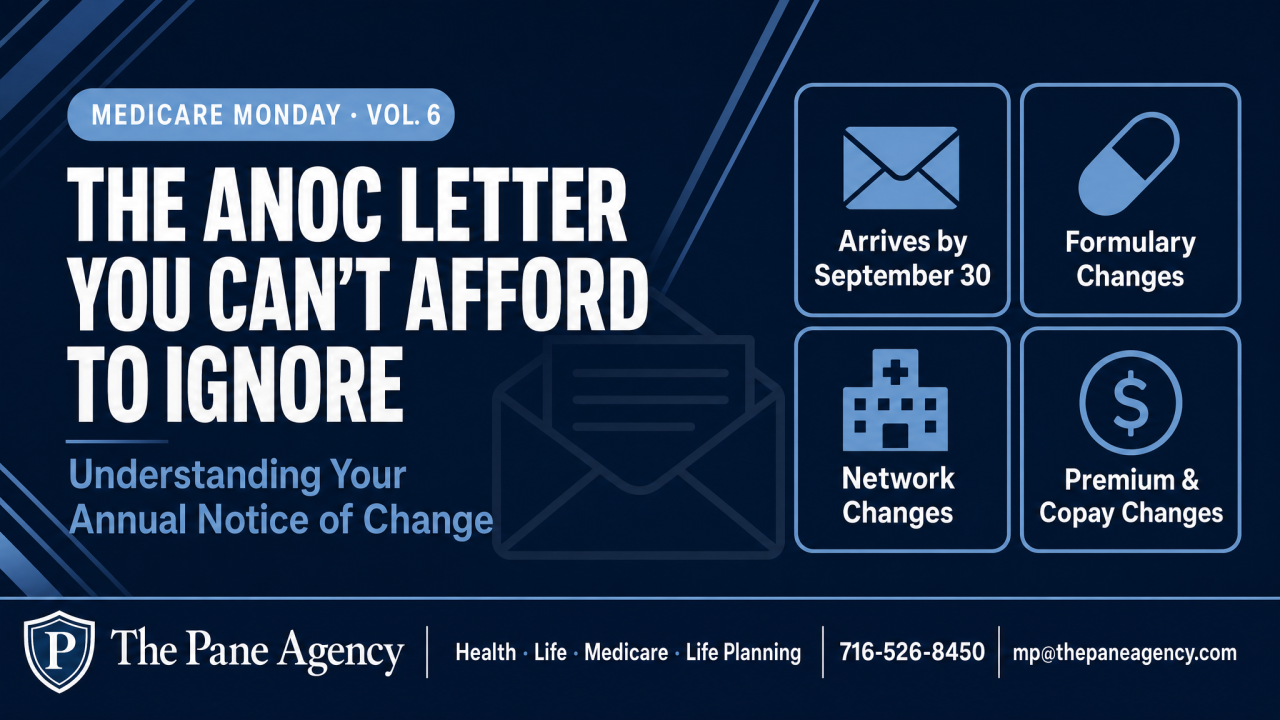
Every September, Medicare Advantage and Part D enrollees receive a document in the mail that most people glance at for ten seconds and toss in a drawer: the Annual Notice of Change (ANOC).
That's a mistake — and it's one of the most common, costly mistakes I see every single Open Enrollment season. This week, before the ANOC letters even arrive, let's talk about what's in them and why reading every page matters.
What Is the ANOC?
Medicare requires every Medicare Advantage and Part D plan to send enrollees an Annual Notice of Change by September 30th each year. It details exactly what's changing about your plan for the following calendar year — before Open Enrollment (Oct 15–Dec 7) even begins.
This is not marketing material. It is a legally required disclosure, and it typically includes changes to:
- Monthly premium — up, down, or unchanged
- Deductible — annual amount required before coverage kicks in
- Copays and coinsurance — for doctor visits, specialists, hospital stays, and prescriptions
- Formulary (drug list) — medications added, removed, or moved to a different tier
- Provider network — doctors, specialists, or hospitals leaving or joining the network
- Out-of-pocket maximum — the most you'd pay in a plan year
- Extra benefits — dental, vision, hearing, gym membership, and OTC allowances
Why So Many People Miss What Matters
The ANOC is often 20+ pages, written in dense insurance language, and arrives during a busy time of year. Most people skim the first page (premium change) and stop there.
The problem: the premium is often the least important number in the document. A plan can keep its premium flat while:
- Moving your specific medication to a higher cost tier
- Dropping your specialist from the network
- Reducing your dental benefit cap
- Increasing your specialist copay from $35 to $65
None of that shows up unless you read the whole document — or have someone review it for you.
The 4-Point ANOC Review
When your ANOC arrives this September, don't just skim it. Run it through these four checks:
- 1. Check every medication you take against the new formulary. Has anything moved tiers? Has anything been removed entirely?
- 2. Check every doctor and specialist you see against the new network. Provider directories change more often than most people realize.
- 3. Compare your total annual cost — not just the premium. Premium × 12 + deductible + expected copays = your real number.
- 4. Review the extra benefits section line by line. Dental and vision caps, OTC allowances, and gym benefits often shift year to year without much attention drawn to them.
The Bottom Line
The ANOC exists to give you time to make an informed decision before Open Enrollment — but only if you actually read it. When yours arrives this fall, don't let it sit in a drawer.
Even better: bring it to me. I'll review it with you, page by page, at no cost, and tell you plainly whether your plan is still the right fit — or whether it's time to look at alternatives.
This article is for general education only and is not plan-specific advice. Plan terms are set annually by each carrier under CMS rules. For official information visit Medicare.gov or call 1-800-MEDICARE.